Case study · Side project
RulerIQ
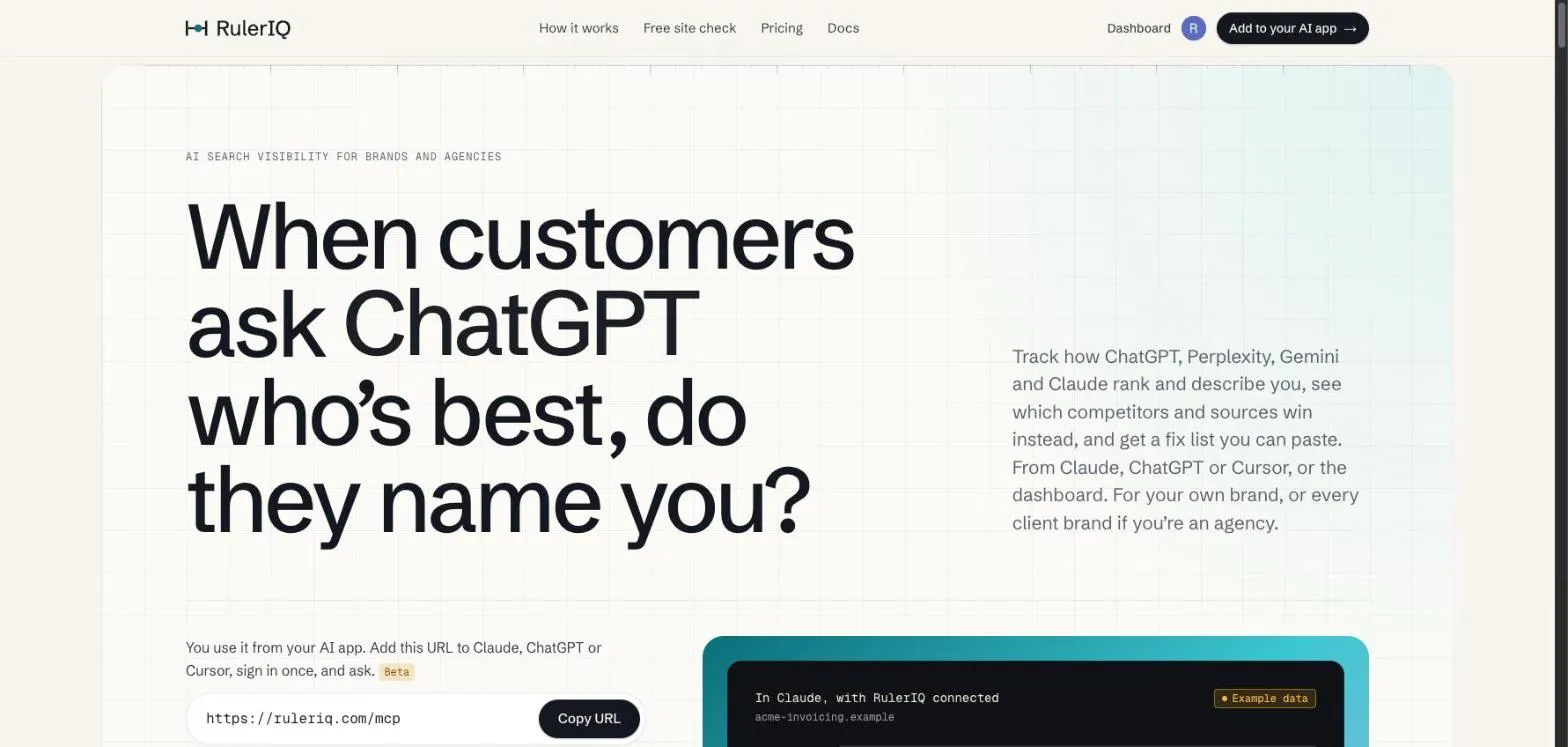
A SaaS that asks ChatGPT, Perplexity, Gemini and Claude what buyers ask, and shows a brand which pages AI cites and what to fix.
Why I built it
More buyers ask an AI assistant which tool to use than search for it. A handful of products already claim to measure what those assistants say about a brand. I dug into how they work and decided I could build my own.
What it does
RulerIQ asks the four major assistants the questions a buyer would ask, records which brands they name and which pages they cite, and turns the gaps into a fix list: pages to get listed on, wrong facts to correct, and paste-ready FAQ, JSON-LD and llms.txt.
It ships as an MCP server first, so customers can use it straight from Claude, ChatGPT or Cursor.
How it’s built
TypeScript end to end: a Next.js app, a Postgres-backed job queue and background worker on Fly.io, Clerk auth, Stripe billing, PostHog analytics, and Slack, Notion, Linear and Google Search Console integrations.
Building with agents
I run development with a team of AI coding agents. I write the specs, review every pull request and gate merges on CI (typecheck, tests and build), so nothing ships that I haven’t read and the tests haven’t passed.
What I learned
The hard part wasn’t the scoring, it was honesty. AI answers change from run to run, so I spent as much time measuring that noise, and refusing to show numbers that weren’t real, as I did building the score.